Workers on a Queensland construction site don’t need another generic safety handout. They need clarity, relevance, and consistency—especially when it comes to daily safety discussions. That’s where a well-structured toolbox talk template QLD teams can trust makes all the difference. These aren’t just forms to tick off; they’re frontline tools that keep crews aware, accountable, and alive.
A strong toolbox talk isn’t about reading from a script—it’s about starting conversations. And in Queensland, where diverse industries from mining to civil construction operate under strict safety obligations, using a compliant, actionable template is non-negotiable.
This guide cuts through the clutter. You’ll get a practical, ready-to-use toolbox talk template, insights specific to QLD regulations, and real-world applications that go beyond paperwork.
Why a QLD-Specific Toolbox Talk Template Matters
Safety isn’t one-size-fits-all. A template built for Queensland workplaces respects local legislation, climate conditions, and high-risk industry profiles.
Workplace Health and Safety Queensland (WHSQ) enforces the Work Health and Safety Act 2011 (Qld), requiring employers to eliminate or minimise risks “so far as is reasonably practicable.” Regular toolbox talks are a documented way to meet this duty.
But compliance is only part of the story. In remote mine sites, coastal infrastructure projects, or busy urban builds, hazards evolve daily. A fire risk in Mount Isa differs from a fall hazard on a Gold Coast high-rise. Your template must prompt discussions that reflect that reality.
Using a generic national template risks missing key local factors: - Cyclone season preparation in North Queensland - Heat stress protocols in inland regions - Specific PPE requirements for mining or rail work - Language diversity on multicultural crews
A QLD-focused template builds in these nuances so conversations stay relevant—and effective.
Key Elements of an Effective Toolbox Talk Template
A good template does more than collect signatures. It structures dialogue, documents decisions, and creates a record of due diligence. Here’s what every toolbox talk template for QLD should include:
1. Meeting Details
- Date, time, location
- Supervisor/conductor name
- Crew names and roles (with sign-off)
2. Topic Focus Name the hazard or procedure being discussed (e.g., Working at Heights, Manual Handling Risks, Excavation Safety).
3. Hazard Identification Use prompts like:
- What could go wrong?
- Where have we seen this issue before?
This forces active thinking, not passive listening.
4. Control Measures List current controls (e.g., harnesses, signage, barricades) and assess their effectiveness.
5. Incident Recall or Near Miss Include a section to discuss:
- Any recent incidents on site
- Close calls team members experienced
This promotes psychological safety and learning.
6. Questions & Discussion Summary A short space for notes on what the crew raised ensures accountability.
7. Sign-Off Sheet Mandatory signatures prove attendance and understanding.
Pro Tip: Never run a toolbox talk without allowing open dialogue. The template should guide—not dominate—the conversation.
Free Printable Toolbox Talk Template (QLD Ready)
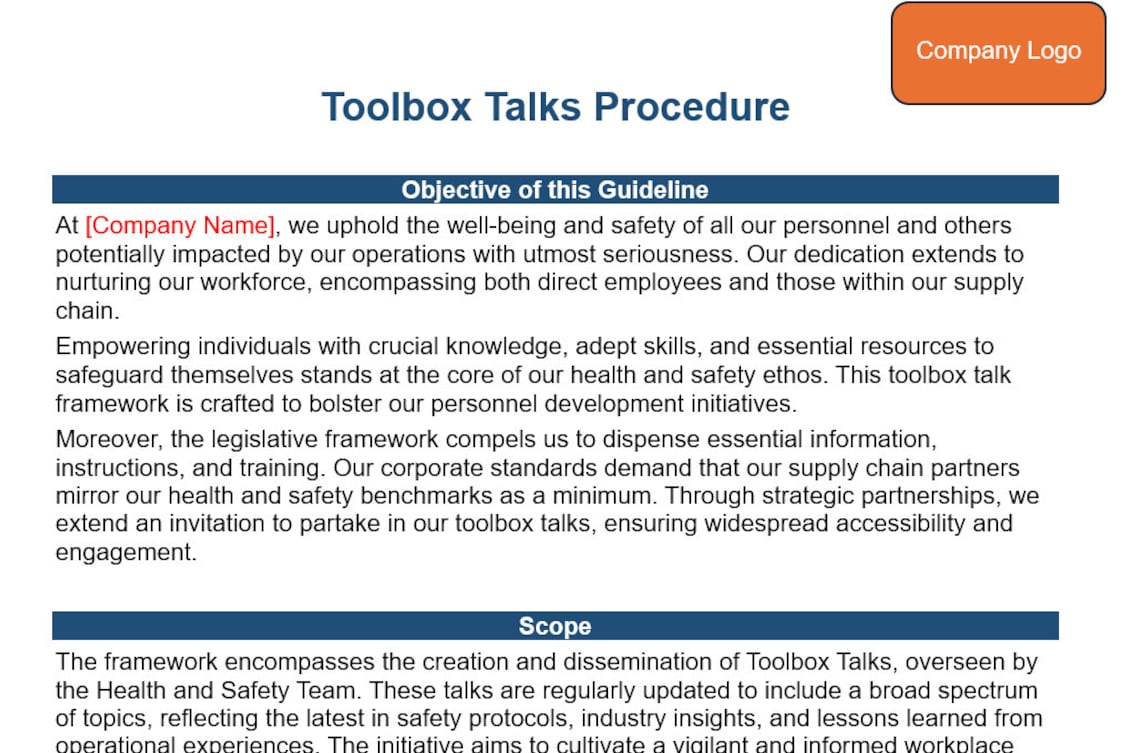
Below is a lean, practical template you can copy and adapt for daily use across construction, mining, maintenance, and transport sectors in Queensland.
text
TOOLBOX TALK RECORD – QLD SITE
Date: _______________ Time: _______________ Location: ____________ Conducted by: ________
TOPIC: [e.g., Hot Work Safety, Confined Spaces, Plant Operation]

HAZARDS IDENTIFIED: - [List 2–3 specific risks, e.g., fire from welding sparks, poor ventilation]
CONTROL MEASURES IN PLACE: - [e.g., Fire extinguisher on standby, permit system active, ventilation fans running]
NEAR MISS / INCIDENT REVIEW: - [Briefly describe any recent event or observation]
QUESTIONS RAISED: - [e.g., “Are fire blankets checked weekly?” → Answer: “Yes, by site supervisor every Monday”]
ACTION ITEMS: - [e.g., “Check gas hose integrity before Thursday shift”]
- ATTENDANCE & SIGNATURES:
- _______________
- _______________
- _______________
- ... (add lines as needed)
This format is printer-friendly, fits on one A4 sheet, and meets WHSQ expectations for documented safety engagement.
Real-World Use Case: A civil contractor in Toowoomba uses this template every morning before roadwork begins. They rotate topics weekly—week one on traffic management, week two on trenching—ensuring all high-risk areas are covered quarterly.
Common Mistakes to Avoid in QLD Toolbox Talks
Even with a solid template, many teams undermine their impact through poor delivery. Watch out for these pitfalls:
❌ Treating It as a Tick-Box Exercise Signing in without discussion defeats the purpose. WHSQ can issue penalties if records appear fabricated.
❌ Repeating the Same Topics Without Refreshing Content Covering "slips and trips" every week with no new insight breeds complacency.
❌ Ignoring Crew Input Frontline workers often spot hazards supervisors miss. Shutting down questions kills trust.
❌ Using Jargon or Complex Language Not every worker has English as a first language. Use plain terms and visual aids when possible.
❌ Conducting Talks in Poor Conditions Holding a safety meeting next to a roaring excavator means no one hears anything.
Fix: Pick a quiet, shaded area. Use pictorial aids. Encourage participation with open-ended questions.
Industry-Specific Toolbox Talk Examples (QLD)
One template fits many, but tailoring topics to your sector increases relevance.
Construction – Working at Heights Focus points:
- Anchor point inspection
- Harness pre-use checks
- Weather impact (wind, rain)
Template prompt: “Who here has worked at height in the last 48 hours? What control failed or worked well?”
Mining – Haul Truck Blind Spots Focus:
- Spotter communication protocols
- Seatbelt compliance
- Night visibility
Real incident tie-in: Reference a near-miss from another QLD mine site to highlight urgency.
Utilities – Underground Cable Safety Emphasise:
- Dial Before You Dig compliance
- Cable location tools
- Emergency shutdown steps
Action check: “Confirm all team members have completed Level 2 electrical awareness training.”
These aren’t hypotheticals—they reflect frequent hazard alerts issued by WHSQ.
Digital vs. Paper Toolbox Talk Systems in QLD
More companies are shifting to digital platforms for better tracking and compliance. But is it right for your team?
| Factor | Paper-Based | Digital System |
|---|---|---|
| Setup Cost | Low | Medium to High |
| Real-Time Updates | No | Yes |
| Audit Trail | Manual filing | Automatic cloud backup |
| Crew Accessibility | On-site only | Mobile access |
| Customisation | Limited | High |
When paper wins: Small crews, remote locations with no signal, infrequent operations.
When digital wins: Large contractors, multi-site operations, clients requiring automated reporting (e.g., government tenders).
Workflow Tip: Hybrid models work well. Use printed templates onsite, then scan and upload for central records.
Top 5 Digital Tools for Managing Toolbox Talks in Queensland
While paper remains popular, digital tools offer scalability and compliance tracking. Here are five reliable platforms used across QLD:
- Site Diary
- - QLD-built for construction and civil teams
- - Offline mode for remote sites
- - Pre-loaded safety templates including WHSQ-aligned toolbox talks
- ManualTasks
- - Cloud-based with mobile app
- - Automated reminders and reporting
- - Integrates with SafeWork NSW/QLD frameworks
- iAuditor by SafetyCulture
- - Highly customisable templates
- - Photo and voice note support
- - Real-time analytics on safety trends
- Procore
- - Enterprise-level construction management
- - Full safety module with audit trails
- - Best for large contractors managing multiple QLD projects
- Farmow
- - Simple interface, low cost
- - Designed for small to mid-sized trade teams
- - Includes incident reporting and equipment checks
Each offers free trials—test one for two weeks before committing.
How to Make Toolbox Talks Stick: Engagement Strategies
A great template fails without engagement. Try these methods to drive real participation:
- Rotate facilitators: Let experienced workers lead a session. Boosts ownership.
- Use visuals: Bring a damaged harness to show wear-and-tear.
- Link to recent events: “Remember the storm last week? How would we handle crane ops if winds pick up today?”
- Time it right: 10–15 minutes, just before shift starts—never during lunch or fatigue hours.
- Reward input: Acknowledge workers who raise valid concerns. Recognition builds culture.
One electrical contractor in Brisbane gives a “Safety Spot” badge each week to a team member who contributes most during toolbox talks. It’s low-cost, high-impact.
Final Thoughts: Your Template Is Only as Strong as Your Follow-Through
A toolbox talk template QLD compliant isn’t just paperwork—it’s a living safety ritual. Whether you use a hand-written sheet or a digital dashboard, consistency and authenticity matter most.
Customise the template provided. Train supervisors to facilitate, not lecture. Review past talks monthly to spot recurring risks. And never stop improving.
Start tomorrow: run your next toolbox talk using this structure. Document it. Act on one feedback item. That’s how safe sites are built—one conversation at a time.
FAQ
Where can I download a free toolbox talk template for QLD? You can copy the printable template provided in this article. It’s designed for immediate use on QLD job sites and aligns with WHSQ expectations.
How often should toolbox talks be held in Queensland? At minimum, weekly for high-risk work. Daily is recommended on active construction or mining sites, especially after incidents or when new hazards arise.
Do all workers need to sign the toolbox talk sheet? Yes. Signatures confirm attendance and understanding. Unsigned sheets reduce legal defensibility during audits or investigations.
Can I use a digital signature for toolbox talks? Yes—digital signatures are valid if the system ensures authenticity (e.g., unique login, timestamp, device location).
What topics should I cover in QLD toolbox talks? Focus on current site risks: working at heights, plant operation, traffic management, heat stress, electrical safety, and confined spaces.
Are toolbox talks a legal requirement in Queensland? They’re not mandated by name, but regular safety meetings are an expected part of risk management under the WHS Act 2011 (Qld).
Who can conduct a toolbox talk? A qualified supervisor, site manager, or safety officer. They must understand the topic and be able to lead discussion effectively.
FAQ
What should you look for in Toolbox Talk Template QLD: Practical Guide for Safe Workplaces? Focus on relevance, practical value, and how well the solution matches real user intent.
Is Toolbox Talk Template QLD: Practical Guide for Safe Workplaces suitable for beginners? That depends on the workflow, but a clear step-by-step approach usually makes it easier to start.
How do you compare options around Toolbox Talk Template QLD: Practical Guide for Safe Workplaces? Compare features, trust signals, limitations, pricing, and ease of implementation.
What mistakes should you avoid? Avoid generic choices, weak validation, and decisions based only on marketing claims.
What is the next best step? Shortlist the most relevant options, validate them quickly, and refine from real-world results.